In recent years, regarding Malaysia CN2 Multiple evaluations of the network provide empirical evidence for corporate networking decisions. This article, “An Analysis from a Cost-Benefit Perspective of Recent CN2 Evaluations in Malaysia and Their Implications for Corporate Decision-Making,” aims to combine technical evaluations with cost models to help decision-makers make more informed choices regarding bandwidth procurement, service selection, and operational budgets, thereby improving return on investment.
Recent evaluations typically cover key metrics such as latency, packet loss, jitter, and stability. These technical indicators directly affect user experience and business availability. The cost dimensions include direct bandwidth costs, switching and deployment costs, as well as potential business losses caused by network issues. Quantifying the evaluation results into financial risk and operational costs is the first step in assessing the cost-effectiveness of the CN2 route.

A trade-off is needed between performance improvements and rising costs: High-performance paths can reduce business losses caused by latency or packet loss, but they usually come with higher service costs. Companies should develop tiered procurement strategies based on the application’s sensitivity to latency, traffic patterns, and peak loads, in order to avoid unnecessary high costs for non-critical traffic, thereby achieving more efficient allocation of resources.
Tests show that different routes and backbone paths perform significantly differently during critical periods, suggesting that companies should prioritize multi-dimensional evaluation when purchasing bandwidth. Including evaluation data in SLA negotiations, and clarifying the responsibilities and compensation mechanisms during peak times and for fault recovery, can reduce the risk of purchasing decisions being misled by average values alone, ensuring the availability of critical services during periods of high demand.
When choosing a service provider, price should not be the only criterion; rather, one should consider the transparency of their network, their failure response mechanisms, and their ability to provide multiple paths for connectivity. By formulating strategies for multiple suppliers or backup routes based on evaluation results, it is possible to effectively mitigate the risk of single-point failures and improve business continuity and user experience within manageable cost limits.
When making decisions, companies should include both the initial purchase cost and long-term maintenance, upgrading, and replacement costs in the total cost of ownership (TCO). The stability and failure rate metrics reflected in the evaluations can be used to predict operational loads, thereby providing a basis for budget allocation, spare parts procurement, and staff training. This helps to reduce hidden costs and optimize long-term investment returns.
In summary, “An Analysis from a Cost-Benefit Perspective of Recent CN2 Evaluations in Malaysia and Their Implications for Corporate Decision-Making” shows that combining evaluation metrics with cost models is an effective way to optimize network investments and ensure business continuity. It is recommended that companies adopt hierarchical procurement, specify guaranteed service levels during critical periods in SLAs, and establish multiple backup mechanisms to achieve a measurable optimal balance between performance and cost.
- Latest articles
- Free Server Korea Security Protection Policy And Backup Implementation Guide
- Cost And Operation Management Recommendations For Enterprises Deploying Korean CN2 Site Cluster Cloud Servers
- Basic Information On Taiwan Proxy Servers, Common Terminology Explanations, And Purchase Precautions
- How To Choose A Cloud Server In Thailand: From Network Latency To After-sales Service, Comprehensive Aspects
- Recommended Recommendations For Operators To Improve Thailand's High-Defense VPS Protection And Bandwidth Stability By Comparison
- Optimized Storage Costs For Hong Kong Hosted Servers, Hard Disk Servers, Layered Storage, And Cold Archiving Solutions
- Are Tencent Cloud Korean Servers Native? Recommendations For Local Service Provider Integration And Latency Optimization
- The Enterprise Migration Guide Teaches You How To Apply For US Dual-line Server Hosting To Ensure Compliance
- How Does AWS Cloud Server In Japan Charge? Bill Analysis And Fee Alert Settings
- Beginner's Guide: Which Hong Kong Site Cluster Servers Are Best To Use? Choose Based On Your Business Scale
- Popular tags
-

Optimize Your Business: Malaysia CN2 VPS Recommendation
Learn how to optimize your business and choose the right Malaysian CN2 VPS to improve website performance and user experience. -

How To Maximize The Bandwidth Utilization And Access Speed Of Malaysia Cn2 Through Optimized Configuration
overview of practical methods to optimize configuration through network topology, routing strategy, transmission protocol, bandwidth allocation, cdn deployment and monitoring methods to maximize bandwidth utilization and access speed when using cn2 links in malaysia. -
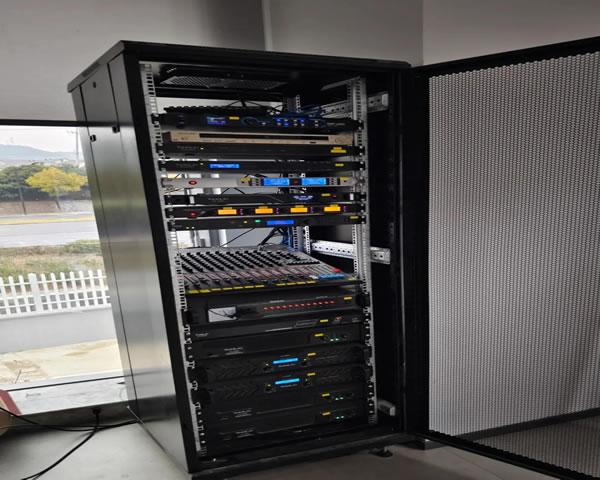
How To Quickly Find The Best Option For Computer Servers In Malaysia
this article will provide you with the best options for choosing a computer server in malaysia, including considerations, service types, and vendor recommendations to help you find the right server quickly.